Best Formations and Winning Tactics in Pro Evolution Soccer 6
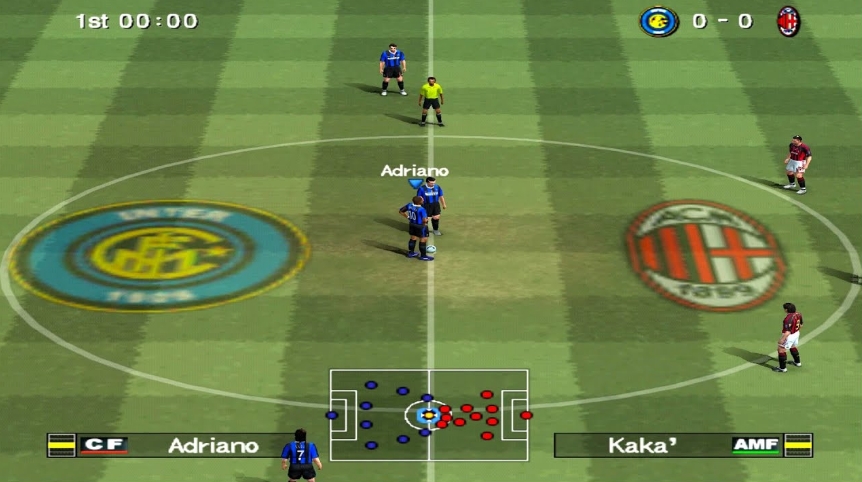
A formation determines how footballers distribute themselves across the pitch, but winning matches in Pro Evolution Soccer 6 requires more than selecting a particular tactical arrangement. Players must consider individual attributes, available passing options, defensive responsibilities, and the strategies used by opposing teams.
There is no universal formation that guarantees victory. A system that works effectively with one squad may produce different results when used with footballers who have incompatible characteristics.
Understanding Football Formations
The formation menu allows players to establish the starting positions of defenders, midfielders, and attackers. Choosing a suitable arrangement helps organize possession and maintain defensive stability.
| Formation | Main strength | Potential weakness |
|---|---|---|
| 4-4-2 | Balance between defense and attack | Can struggle against crowded midfields |
| 4-3-3 | Wide attacking options | Requires defensive support from midfield |
| 4-5-1 | Midfield control | One striker may become isolated |
| 3-5-2 | Numerous central passing opportunities | Vulnerability on the wings |
| 4-3-1-2 | Central attacking combinations | Limited natural width |
| 5-3-2 | Defensive protection | Fewer attacking options |
| 4-2-3-1 | Defensive midfield coverage and attacking support | Requires suitable attacking midfielders |
Players should select formations according to the footballers available rather than attempting to force every squad into the same system.
Best Formation for Beginners
The traditional 4-4-2 is a suitable starting option because it distributes footballers across defensive, midfield, and attacking positions without requiring highly specialized movement.
Two central midfielders provide passing opportunities, while wide midfielders support attacks from the wings. The presence of two forwards creates additional options near the opposing penalty area.
To use this formation effectively:
- Select defenders with suitable defensive attributes.
- Use wide midfielders with sufficient stamina.
- Include a central midfielder capable of organizing passes.
- Assign another midfielder to defensive responsibilities.
- Choose forwards with complementary abilities.
- Avoid moving both full-backs forward simultaneously.
- Maintain passing connections between all three lines.
One striker can receive the ball under pressure while the other moves into available space. This combination creates different attacking possibilities without requiring extensive tactical adjustments.
Possession-Based Football
Maintaining possession can help players control the tempo of a match and reduce the number of attacking opportunities available to opponents.
A 4-5-1 or 4-2-3-1 formation can provide additional passing options in midfield.
The objective is to move the ball until gaps appear within the opposing defense. Avoid forcing every pass toward the goal. Moving possession backward or toward another side of the pitch may provide a better opportunity.
Footballers with strong Short Pass Accuracy, Technique, and Teamwork attributes are particularly useful in possession-oriented systems.
Counterattacking Strategies
Counterattacking football concentrates on exploiting the spaces opponents leave after losing possession. This approach is useful against teams that move several footballers forward during attacks.
A successful counterattack generally involves the following sequence:
- Recover possession in a defensive or midfield area.
- Identify an available attacking teammate.
- Deliver the ball before defenders reorganize.
- Use supporting runs to create additional passing options.
- Approach the goal without unnecessary dribbling.
- Complete the attack before the opposition recovers its formation.
Footballers with high acceleration and movement speed can be particularly effective in this system. However, accurate passing remains necessary because a mistimed delivery can end the attacking opportunity.
Attacking Through the Wings
Wide formations such as 4-3-3 provide opportunities to move around crowded central areas.
Wingers can receive passes near the sidelines and deliver crosses toward forwards inside the penalty area. Alternatively, they can move inward and attempt shots or short combinations with supporting midfielders.
Different player characteristics suit different approaches.
| Footballer characteristics | Recommended responsibility |
|---|---|
| High speed and acceleration | Running into open spaces |
| Strong crossing ability | Delivering balls from wide areas |
| High dribbling accuracy | Creating openings against defenders |
| Strong heading and jumping | Receiving aerial crosses |
| High shot accuracy | Completing central attacks |
| Strong physical balance | Protecting possession under pressure |
Players should also consider each winger’s preferred foot when determining whether they should deliver crosses or move toward central shooting positions.
How to Protect a Lead
When leading late in a match, maintaining defensive organization becomes increasingly important.
Switching to a more defensive formation can provide additional protection, but placing every footballer near the goal may allow opponents to control possession continuously.
Instead, preserve several passing options and avoid unnecessary risks.
Recommended adjustments include:
- Introduce substitutes with sufficient stamina.
- Reduce unnecessary attacking movements from defenders.
- Maintain defensive midfield coverage.
- Keep possession when safe passing options exist.
- Avoid risky deliveries across defensive areas.
- Retain at least one forward for counterattacks.
Adjusting Tactics During a Match
The most effective formation at kickoff may become unsuitable after several goals, substitutions, or changes in the opponent’s strategy.
Observe how your team performs and make adjustments according to the problem.
| Match situation | Suggested adjustment |
|---|---|
| Midfield is being dominated | Add another central midfielder |
| Strikers rarely receive passes | Move supporting players closer |
| Opponent attacks through the wings | Strengthen wide defensive coverage |
| Your team needs a late goal | Introduce another attacking player |
| Defenders are becoming tired | Make defensive substitutions |
| Opponent constantly pressures the ball | Use quicker passing combinations |
Winning regularly in Pro Evolution Soccer 6 depends on recognizing weaknesses while a match is still developing. Formations establish the basic structure, but player selection, substitutions, possession management, and tactical adjustments determine how effectively that structure functions.
