PES 2006 Browser Master League Guide: Transfers, Player Development and Club Management
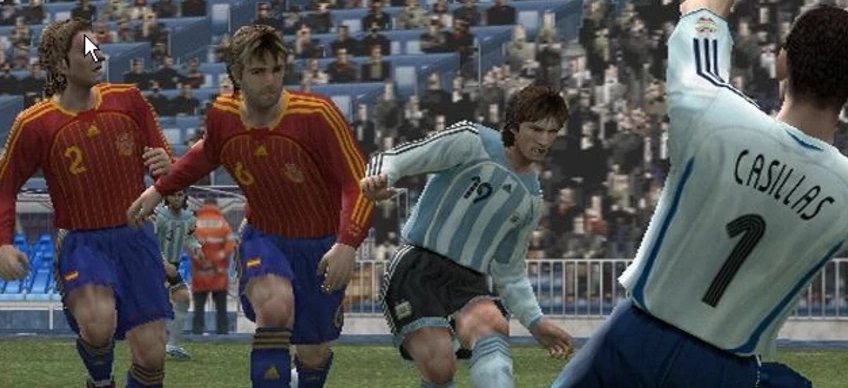
Master League transforms PES 2006 Browser from a series of individual football matches into an extended club management experience. Players become responsible for developing a squad, maintaining financial stability, negotiating transfers, and achieving results across multiple seasons.
The objective is not limited to winning the next fixture. Every recruitment decision, salary commitment, and tactical adjustment can influence the club’s future. A successful Master League career requires balancing immediate sporting needs with long-term development.
How to Start Master League
When beginning a new career, players select their club and determine the available starting conditions.
Depending on the selected configuration, they can begin with the club’s established footballers or use the traditional Master League default squad.
The default team contains fictional players who provide a more challenging starting point for club development.
| Default player | Position | Suggested responsibility |
|---|---|---|
| Ivarov | GK | Goalkeeping |
| Jaric | CB | Central defense |
| Valeny | Defender | Defensive coverage |
| Dodo | DMF | Defensive midfield support |
| Iouga | DMF | Midfield organization |
| Espimas | SMF | Wide midfield support |
| Ximelez | SMF | Movement along the wings |
| Minanda | AMF | Creating attacking opportunities |
| Castolo | Forward | Attacking movement |
| Ordaz | CF | Central finishing |
These footballers provide the foundation for developing a club before more experienced or technically capable players become affordable. Fandom+1
Understanding Master League Points
Master League uses an internal points system to represent the club’s financial resources. These points are separate from the league standings and can be used for recruitment and salary payments.
Winning matches and achieving sporting objectives contribute to financial development. However, spending too many points on transfers can leave insufficient resources for maintaining the squad.
Before completing a transfer, consider:
- The player’s transfer requirements.
- Annual salary demands.
- Remaining contract duration.
- Current club resources.
- Existing squad expenses.
- The player’s potential development.
- Whether the signing addresses a genuine weakness.
Financial management is particularly important during the first season because the club has fewer opportunities to recover from expensive recruitment decisions.
Best Transfer Strategy for the First Season
Signing famous footballers immediately is not always the most effective approach. Established stars may require substantial resources or refuse to join a club competing in a lower division.
Instead, identify positions that need immediate improvement and search for affordable alternatives.
| Position | Recruitment priority |
|---|---|
| Goalkeeper | Response and goalkeeping ability |
| Center-back | Defense, balance, and heading |
| Full-back | Stamina, speed, and defensive ability |
| Defensive midfielder | Defense, teamwork, and passing |
| Central midfielder | Passing accuracy and stamina |
| Attacking midfielder | Technique and creativity |
| Winger | Acceleration, dribbling, and crossing |
| Striker | Shot accuracy, response, and positioning |
A balanced recruitment strategy may produce better results than spending most available resources on a single attacker.
Players should also examine the market for younger footballers and those without current club affiliations.
How Transfer Negotiations Work
Transfer opportunities become available during designated negotiation periods. Players can search for footballers, examine their attributes, and submit offers.
A proposed transfer may be rejected for financial or sporting reasons. Footballers established at successful clubs can be particularly difficult to recruit during the initial stages of a career.
Follow this process when preparing for a negotiation period:
- Review your strongest and weakest positions.
- Establish a maximum recruitment budget.
- Identify several candidates for each required position.
- Compare their attributes and development potential.
- Submit reasonable transfer and salary offers.
- Consider alternative candidates if negotiations fail.
- Preserve sufficient points to cover existing obligations.
Avoid concentrating exclusively on one target. Maintaining several recruitment options reduces the consequences of unsuccessful negotiations. Association Football+1
Young Players and Development Curves
Footballers in Pro Evolution Soccer 6 can improve or decline throughout their careers. Their development patterns determine when attributes increase, reach their strongest period, and begin decreasing.
Young footballers can become important members of a squad after gaining experience. However, not every young player follows the same growth pattern.
Experienced footballers can provide immediate improvements but may have fewer remaining seasons at their highest ability.
| Player category | Advantages | Disadvantages |
|---|---|---|
| Young prospect | Potential for long-term development | May require time to become effective |
| Established player | Immediate contribution | Often requires greater financial investment |
| Experienced veteran | Developed technical abilities | Attributes may begin declining |
| Unaffiliated player | Can reduce initial recruitment costs | Salary and suitability still require evaluation |
| Versatile footballer | Covers several positions | May lack specialized abilities |
Review growth information when comparing footballers with similar current attributes.
A younger athlete with moderate statistics may become more valuable over several seasons than an expensive player who has already reached the declining portion of their career.
Managing Fatigue and Squad Rotation
Playing the same starting eleven throughout an entire season can negatively affect player condition. Consecutive league matches and cup competitions create situations where substitutes become increasingly important.
Effective squad rotation involves:
- Resting footballers with accumulated fatigue.
- Reviewing condition arrows before matches.
- Maintaining alternative players for important positions.
- Introducing substitutes during demanding fixtures.
- Avoiding unnecessary sprinting throughout matches.
- Providing younger players with opportunities to participate.
- Replacing tired footballers before their performance declines significantly.
A squad containing several reliable substitutes is generally more useful across a complete season than a strong starting eleven with limited alternatives.
How to Earn Promotion and Win Championships
Depending on the starting settings, players may begin their careers in Division 2. The first major objective is obtaining promotion and gaining access to stronger competition.
Initial seasons should concentrate on consistent results rather than achieving complicated financial or recruitment targets immediately.
| Career stage | Recommended objective |
|---|---|
| First season | Establish a balanced team and stable finances |
| Early development | Improve weak positions and pursue promotion |
| After promotion | Strengthen the squad for stronger opponents |
| Established club | Compete for domestic titles |
| Advanced career | Pursue international club competitions |
| Long-term development | Replace declining players and maintain success |
Higher levels of competition create a need for stronger footballers and more flexible tactical arrangements. Managers must continue reviewing squad composition instead of relying indefinitely on players recruited during the opening seasons.
Common Master League Mistakes
Several decisions can create difficulties that continue across multiple seasons:
- Spending all available points during one transfer period.
- Recruiting players without checking salary requirements.
- Purchasing attackers while ignoring defensive weaknesses.
- Keeping tired footballers in the starting lineup.
- Ignoring player development and decline.
- Selecting athletes solely according to their reputation.
- Maintaining formations that do not suit the available squad.
- Failing to prepare replacements for aging footballers.
Master League does not have a mandatory story ending. Players can continue developing their clubs, recruiting new generations of footballers, and competing for additional championships.
The long-term appeal of Master League in PES 2006 Browser comes from building a squad whose development reflects the player’s decisions. Financial planning, tactical organization, player recruitment, and consistent performances combine to create an individual football career.
